Once you see where France’s world-famous cheeses and wines are made, you’ll come to understand the country differently. From vineyard-covered hills to lush pastures, these are landscapes shaped by centuries of farming, craft and tradition, and where you’ll taste the very best France has to offer.
France has always been known for its excellent cuisine and fine wine; top restaurants serve perfectly matched pairings while the menus showcase the extraordinary diversity of flavors produced throughout the country. Wherever you go, there are new products to try that reflect age-old traditions, generations of expertise and wildly different landscapes. The country produces wine in hundreds of different zones, indicated by ‘appellations’, including Champagne — produced in the chalky soils of northeastern France — or the Côte d’Or in Burgundy, where renowned wine villages sit alongside the region’s UNESCO-listed vineyards. Cheese is France’s other product that speaks of the land in which it’s produced, whether that’s the prairies of the Jura Mountains in eastern France or the remote mountain peaks of the Alps.
Both wine and cheese are united by the concept of ‘terroir.’ The word is most often applied to wine, and it describes the conditions in which the grapes are grown — climate and soil type, for example. It also applies to cheese, as its flavor can be heavily influenced by the region in which it’s produced. It’s thanks to this variety that France counts more than 400 official classifications for wine and 51 for butters and cheeses. But this is the tip of the iceberg, as many producers choose to create their wines and cheeses outside of the criteria necessary for these classifications — it’s thought that there are more than 11,000 wine-producing operations in France and some 2,000 cheese varieties.
So how can you fully appreciate their flavors? The answer is to visit the very landscapes in which they’re produced. It’s only by seeing those lines of vines across the hillsides, by visiting ageing cellars, seeing cows grazing in meadows and talking to producers that you’ll truly understand the lure of French wine and cheese.

Cité Internationale de la Gastronomie et du Vin
EXPLORE BURGUNDY’S WINE ROUTE
Follow the slow road between Dijon and Beaune and discover where many of the world’s most prestigious and expensive wines are made. It’s a place to swirl sublime chardonnays and inhale exceptional pinot noirs before tasting the very notes that speak of the land in this world-renowned region. These are the UNESCO-listed vineyards that are known as the Climats de Bourgogne and they comprise 1,247 small plots, each with a unique terroir. It’s this exclusivity that warrants the big price tag.
A good place to start a trip, though, is the Cité Internationale de la Gastronomie et du Vin, an impressive visitor center in Dijon that celebrates the art of French gastronomy. Here, in a historic chapel, an exhibition about the ‘climats’ helps visitors comprehend the journey to come. In the next building, the Cité’s enormous wine cave stocks 3,000 labels — 250 of them by the glass — with staff on hand to guide a tasting. Next, the villages await; Pommard, Volnay and Meursault may be well known from wine labels, but nothing compares with being among the vines that make the region’s wines. There are several cycling routes to follow — it’s a gentle way to travel and allows for sipping en route. In the village of Puligny-Montrachet, make a visit to the Olivier Leflaive winery, where this winemaker is the 18th generation of his family to make wine in the village. The vineyard has a bistro that serves cocottes (warming stews in a pot), with a two-course menu from around $37.
Then on to Beaune, a beautiful town known for the iconic Hôtel-Dieu, a museum in a former medieval hospital topped with colorful roof tiles. Also known as the Hospices de Beaune, it was established in 1443 to care for the sick as the country recovered from the Hundred Years War. These days, though, it’s more famous for its wine auction each November, in which vintages from its own prestigious vineyards fetch hundreds of thousands of euros per barrel. While in Beaune, it’s worth joining a cellar tour and tasting at the Joseph Drouhin winery. Enjoy its exceptional vintages, loved by European royalty, and learn how the winery was saved during World War II by nuns from the Hospices de Beaune hiding its owner from the Nazis.

Market in Rouen, Normandy
GO ON A CHEESE TRAIL OF NORMANDY
To fully understand Normandy’s exceptional dairy produce and its myriad cheeses, make a journey to the region’s fromageries and farms. Travel through serene timber-framed villages, past apple orchards and pastures filled with grazing cows, where the region’s cheeses begin their journey to the plate. Start in the small town of Pont-l’Évêque, which gives its name to one of its four signature cheeses, with a tasting at the excellent fromagerie La Dégusterie. Enjoy a tasting platter of the local cheese — it’s square with a golden, brine-washed rind concealing a creamy, semi-soft and salty texture — as well as the area’s other three most famous cheeses: Livarot, Neufchâtel and Camembert. Owner David Raguet can steer visitors toward understanding how a true Camembert is made by hand with unpasteurized milk.
The town is also home to two excellent calvados distilleries — Père Magloire and Calvados Christian Drouin — so visit them before moving on. Livarot is a peaceful town 40 minutes’ drive to the south, and its signature cheese is made at the Fromagerie Graindorge, where its more pungent wheels are wrapped in bands of raffia. Museum spaces explain how the cheese is made from start to finish. There’s little to see in the tiny village of Camembert, so instead head for Rouen — Normandy’s buzzing capital city. The Maison Jollit, a fromagerie close to the memorial of Joan of Arc, sells excellent Camemberts and the region’s fourth famous cheese: Neufchâtel. It’s usually shaped like a heart, and is said to date from the days of the Hundred Years War, when maidens would give them to their soldier lovers.

Comté cheese cellar of Fort Saint-Antoine
TASTE COMTÉ IN THE JURA MOUNTAINS
Step into the Fort Saint-Antoine, a 19th-century fort high in the Jura mountains, and prepare for an awe-inspiring sight: this ‘cathedral of Comté’ has more than 100,000 wheels — weighing 100 pounds each — stacked onto 20-foot-high shelves. It’s here that the Fromagerie Marcel Petite matures its cheeses in the cool stone arches of the 1880s fortress. A tour of the fort reveals the incredible skill demonstrated by the cheesemakers in identifying the best wheels for sale, and a tasting helps visitors learn how the different flavor notes differ on the palate, including fruity, spicy and vegetal.
After a visit, get out into the pastures where it’s possible to fully appreciate how those flavors are born. In the vast golden prairies — where undulating hills are punctuated with spruce forests — Montbéliarde and Simmental cows graze on hundreds of kinds of herbs, flowers and grass, those flavors filtering into the milk and therefore the cheese, which gives a whole new experience when tasting it.
Restaurant du Fromage — in the lakeside village of Malbuisson — is the place to book. In the Alpine-style, wood-paneled dining room, they serve a variety of fondues, all made with Comté rather than the Alpine cheeses for which the dish is famous. Finally, an hour west, just outside the village of Poligny, is the Maison du Comté — a beautifully curated visitor center that explains the process of making Comté.

Pressoria, in Aÿ-Champagne
GO ALPINE CHEESE-TASTING IN THE FRENCH ALPS
The Alps are home to many different cheeses, each with a different character and story. One of the most fascinating varieties is Beaufort, which is produced in the Beaufortain and Tarentaise valleys, and the Maurienne mountains, deep in the Savoie region and not far from the border with Italy. Each summer, Tour de France riders test themselves here against the route’s most challenging stages — such as the Col du Pré and the Col du Galibier — on steep switchback roads that go past lakes, wooden chalets and jagged peaks. Beaufort cheese is known for its concave rind, which made it easy to strap the 30-inch diameter wheels onto mules for transportation down the mountain.
Alongside Beaufort d’Hiver (Beaufort cheese produced in winter) is its summer cousin Beaufort d’Été, while the gold-standard variety is Beaufort Chalet d’Alpage. The latter is made by just 11 families, who each tend a herd of Tarentaise or Abondance cows at an altitude of around 6,600 feet — each summer they’re led to the higher meadows wearing crowns of flowers, their bells jangling in the breeze. In these summer meadows, the cows graze on clover, buttercups and violets, which, in turn, infuses their milk with their flavors. Visit the cooperative in the town of Beaufort to learn more about how it’s made, but to also see inside the aging cellars. Make some time to visit a local market to meet the cheesemakers directly; each Wednesday, in Beaufort’s village square, there’s the chance to nibble pastries and sip coffee while browsing the stalls for local honey, crafts and souvenirs.

Troyes, Aube
VISIT THE CELLARS OF CHAMPAGNE
When strolling down Épernay’s Avenue de Champagne, it’s easy to appreciate the way in which Champagne is made. On the wide boulevard, lined with grand limestone mansions, big-name Champagne houses offer tours around their wineries and cellars. A visit shows how their luxurious sparkling wines are made to the method credited to the 17th-century monk Dom Pérignon, whose (mythical) line, “I’m tasting the stars,” beautifully sums up the experience of sipping the bubbles.
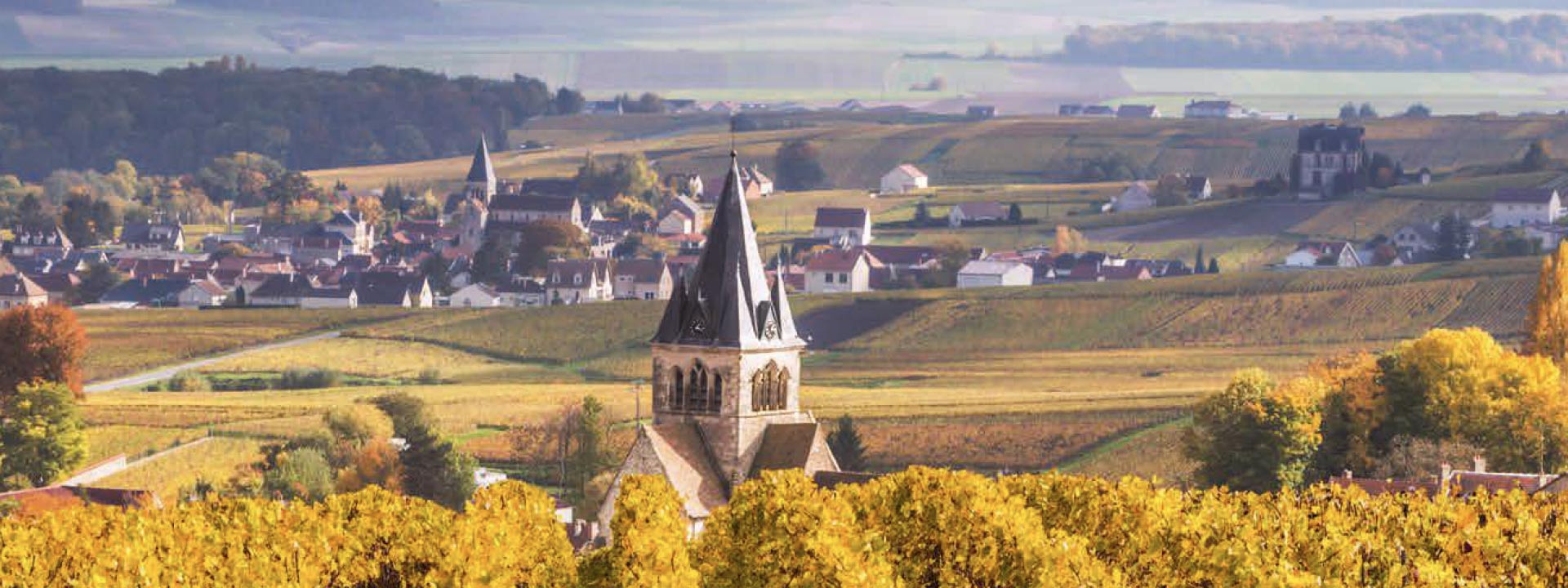
At Champagne Mercier, tour 11 miles of cellars on a miniature train and finish with a tasting. Nearby villages also offer unique ways to experience the home of the bubbly drink. In Aÿ-Champagne, visit the inspiring, interactive visitor center Pressoria. Here, multi- sensory exhibits explain all about how Champagne really came to be, how it’s made and how its flavors are influenced by the climate and landscape. The tour ends with a glass of fizz at the Champagne bar overlooking the vines that line the hillside like corduroy. Another must-see spot is the hilltop village of Hautvillers, which has excellent restaurants and beautiful views of the surrounding vineyards. Reach it by renting an e-bike and cycling the 20 minutes there from Épernay.

Argenton-sur-Creuse
TASTE WINE AND GOAT’S CHEESE IN THE LOIRE VALLEY
All along the Loire — which flows through the center of France past turreted chateaux and ornate gardens — there are restaurant terraces and elegant dining rooms that offer the chance to sip a glass of the region’s signature wines. For whites, there’s Muscadet, Sancerre, Pouilly-Fumé and Vouvray; reds cover Cabernet d’Anjou, Saumur-Champigny and Chinon appellations. Many come from family-run wineries that host their aging cellars in the caves hollowed out to provide the pale tuffeau limestone for the construction of buildings since the 19th century. It’s a quirk of the area, but these ‘troglodyte’ venues have provided naturally cool conditions for aging wines, growing mushrooms and, in some cases, to serve as hotels and restaurants.
One of these wineries is Les Caves du Père Auguste near the town of Amboise and the Château de Chenonceaux — famous for its rose gardens and arches that span the Cher river. The Godeau family offers tours of the cellars and a gourmet tasting including cheese and charcuterie. In the cool of the caves, try some of the five AOP-classified Loire Valley goat’s cheeses. The log-shaped Sainte-Maure-de-Touraine is smooth and creamy with a tangy finish, while Valençay has a firmer texture and nutty aromas. It’s shaped like a pyramid with the top lopped off — legend has it that they cut off the top to appease Napoleon’s feelings when he failed to conquer Egypt.
Writer: Carolyn Boyd