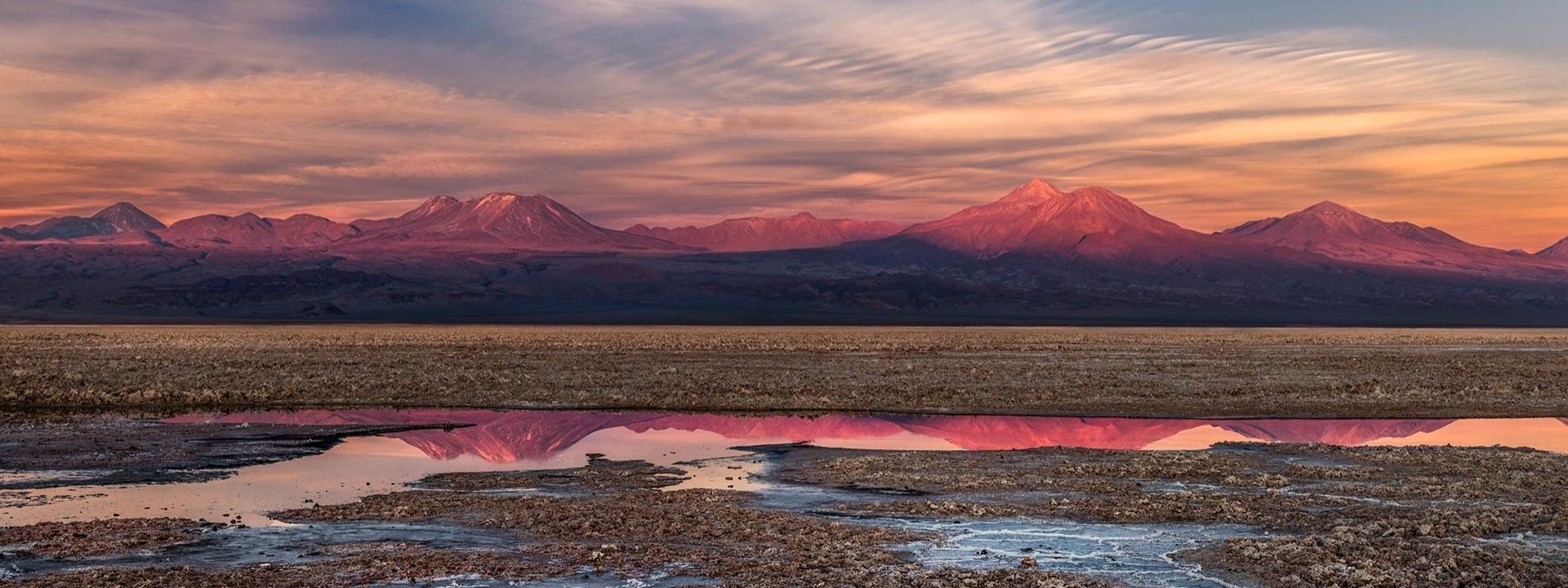
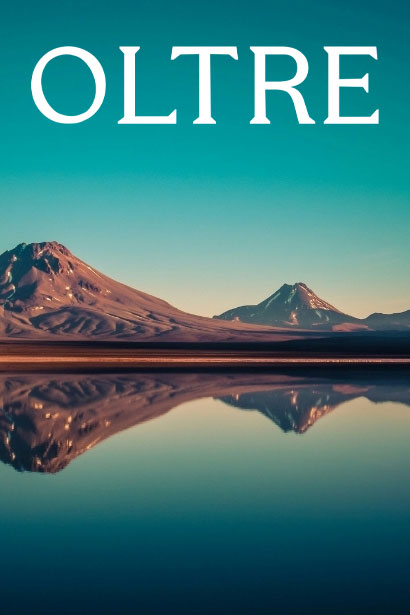
Traveling in Chile, a sliver of land that drapes the edge of the South American Pacific for 2,672 miles - from about 17 degrees S latitude on the border with Peru to 56 degrees South at Cape Horn - yet never more than 112 miles wide, means understanding how radically the elements change as one moves between the north and south. In the far north, in the high altitude of the Atacama Desert, the landscape resembles pure brown nothingness at first arrival in Calama. On the road to San Pedro de Atacama, I spot a lonely guanaco (imagine a wild llama) gracefully galloping across the lunar landscape just as the snowcapped spine of the Andes that form the border with Argentina and Bolivia reveal themselves in the distance.
Then comes the plant life: dots of dark green to pale-green brittle shrubs that grow so slowly their aromas and flavors become the foundation not just of local culinary traditions but also uniquely Chilean spa treatments. By the time I reach my destination, Nayara Alto Atacama, the vibrancy of the desert becomes apparent.
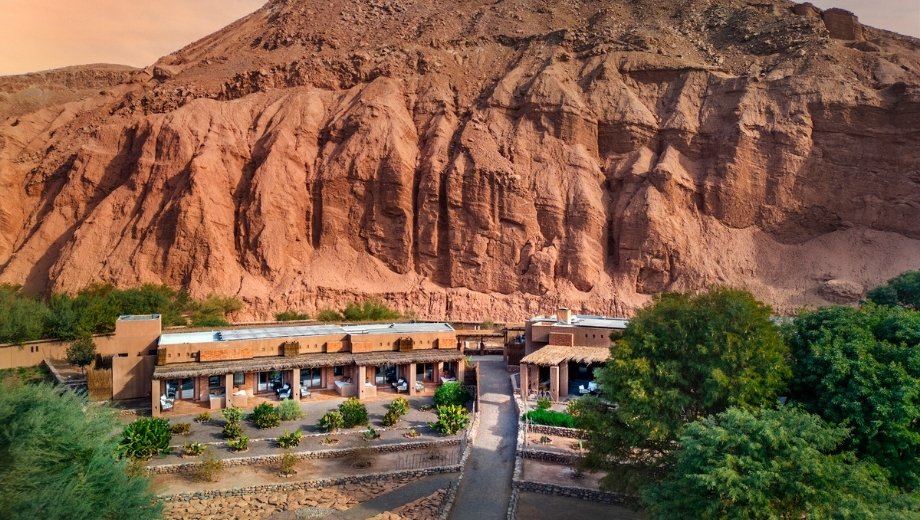
Nayara Alto Atacama Resort
The hotel rests within a narrow river valley surrounded by reddish hills, as if it were carved out of the rock, blending seamlessly into the terrain. I quickly fall into an otherworldly rhythm of electric-fuchsia drinks - dyed with airampoa cactus seeds and flavored with the minty herb muna muna that both grow in the gardens - and collecting the dried fruits of the chanar trees that give shade to my suite and make the bittersweet syrup that I'll drizzle over yogurt each morning. My first days unfold with rica-rica-scented facemasks, long soaks in thermal heated pools and, when the sun goes down, stargazing in the hotel's private observatory to take advantage of the altitude, dry air and cloudless skies for impeccable views of Scorpio and the Southern Cross - while never being far from a clarified milk negroni.
SELECT
But nobody comes this far to stay holed up in the lodge. So my excursions begin at the salar, the Atacama salt flats, reminding me of the vastness of where I am - and that acclimatization should be done gradually. A short path through layers of crusted salt leads to lagoons full of Andean and Chilean flamingos wading through the water to feed on brine shrimps, whose beta carotene give them their pink hues. After a stop at the edge of the flats in the village of Tocanao - where there's now wine being made by a Licanantay cooperative and where we Nayara's guests gain private access to a 1744 adobe and cactus-wood church - the day ends at sunset in the surreal landscape of the Ckamur Valley, sipping Chilean Chardonnay as the moon rises above a string of 6,000 meter volcanoes.
The intensity of the altitude is most evident at El Tatio, the highest geothermal field in the world, at 4,320 meters above sea level. We arrive at sunrise, dressed in heavy jackets, to be there when the geysers and fumaroles are most active. The warm waters feed an entire high wetland ecosystem that begins with cyanobacteria and frogs in bubbling pools and streams, as guanacos and vicunas (essentially wild alpacas) strut by the dozens in the fields surrounding them. There's an Andean fox stalking a grouse-like rufous-bellied seedsnipe beside the bogs near where I warm up with coffee and nibble on charcuterie during a well-earned breakfast in the field. This one tiny point of latitude, the most arid, non-polar place on earth, is far from barren.
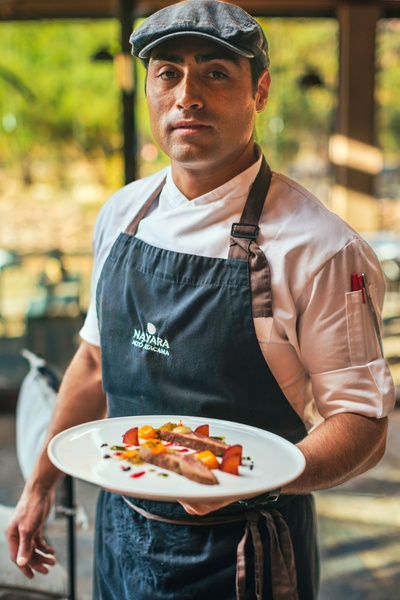
Ckelar restaurant at Nayara Alto Atacama Resort
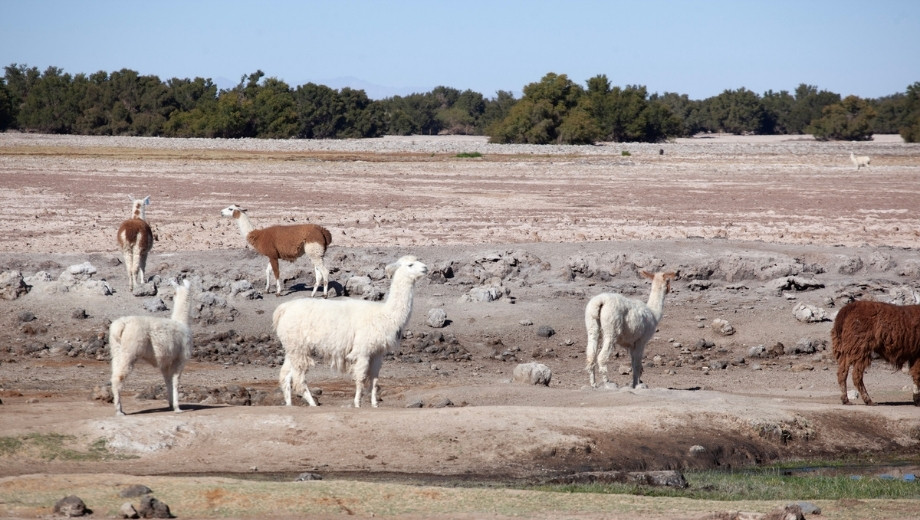
Llamas in the high dessert
As I journey south, beyond Temuco, the Chilean landscape changes from arid to lush. Temperate rainforests of lengua and rauli, types of Nothofagus trees, touched with hanging mosses and a patchwork of lichens, peak out of the misty mountainsides along the Argentine border. Some call it the Lakes District, but Araucania, the land of the Mapuche people, is how Chileans know it.
Outside of Pucon, the country's center of adventure activity, I arrive at the pristine, three-acre farmstead of andBeyond Vira Vira, a collection of 23 oversized suites and villas. The area draws outdoor enthusiasts with fly fishing, mountain biking and white-water rafting. This is andBeyond's first lodge in the Americas, a more year-round option than other comparable properties in Patagonia that similarly merge luxury and comfort with the rugged mountains and forests. Bonus: The resort operates it's own Alpine-style cheese factory. And in winter (our summer, I have to remind myself), there's heliskiing via their Robinson-66 Turbine helicopter, where you can ski down the still-active Villarica volcano, almost right into any number of cushy hot springs facilities for which the area is known.
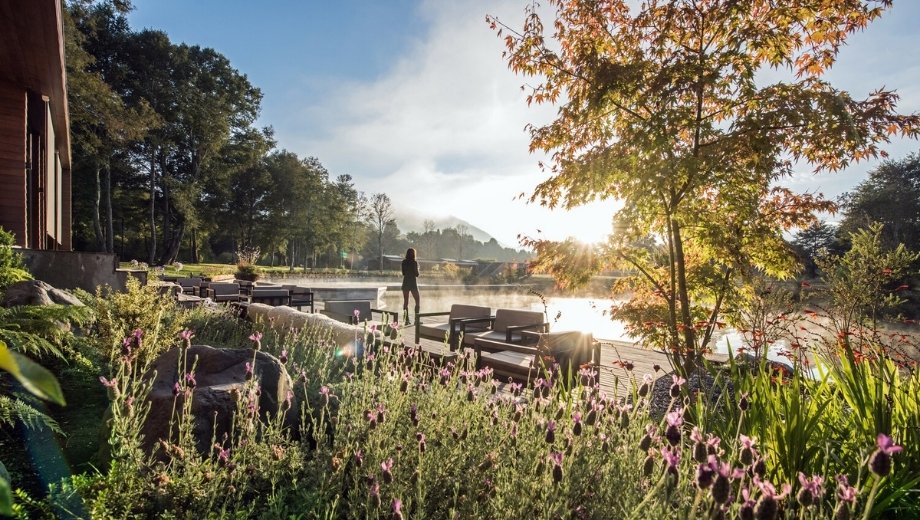
&Beyond's Vira Vira Resort
My visit in the early fall (our spring) is focused on the area's two national parks, Villarica and Huerquehue, short drives away. When we're not kayaking the clear Liurcura River, my guide Diego and I hike through fairy-tale-like trails therapeutically free of other hikers, through fern covered hillsides that lead to raging waterfalls. Along the way, we snack on chaura, the white and pink berries that taste of pears and cotton candy, while watching out to not step on Darwin's frogs that camouflage themselves in the fallen leaves.
Diego is as interested as I in the mushrooms of Chile, a country where fungi possess rare legal rights that preserve their endangered rarest species, the way other countries might look after plants and animals. He pulls out his identification guides, and we scour the moist soil for bright purple Cortinarius magellanicus, and the Aleuria aurantia, which resemble a pile of orange peels. We find plenty of prized edibles, like the coral-shaped changles known as Ramaria flava, which make a fitting addition to my dinner at the lodge.
I'm increasingly intrigued by the pehuen, an evergreen pine also known as monkey puzzle trees, which climb the volcanic soil up to the tree lines. The tallest can grow to 160 feet. From an ancient lineage of conifers, they are a living fossil whose hard, spiky leaves may have once kept away dinosaurs. Undeterred are the forests' green austral parakeets, who feed on the trees' pinones, the nutritious, oversized pine nuts that are a staple among the region's native people.
On a visit to a Mapuche ruka in the community of Qhelhue, Dona Rosario shows me how she uses the pinones to make flour that the locals use for breads, like the tortilla al rescoldo she makes for me, cooked directly in the ashes of a fire, drizzled with the ulmo flower honey she collects. It's a scene that encapsulates her culture's cosmovision: of living amidst the natural world and not on top of it - a knowledge that traveling between latitudes can always serve to remind us.
Your travel advisor works closely with both &Beyond Vira Vira (which starts around $1,000 USD/night) and Nayara Alto Atacama (from about $800 USD/night) to create a detailed Chilean itinerary, including stopovers in the capital city of Santiago - or even Buenos Aires in Argentina and beyond.
Writing: Nicholas Gill


