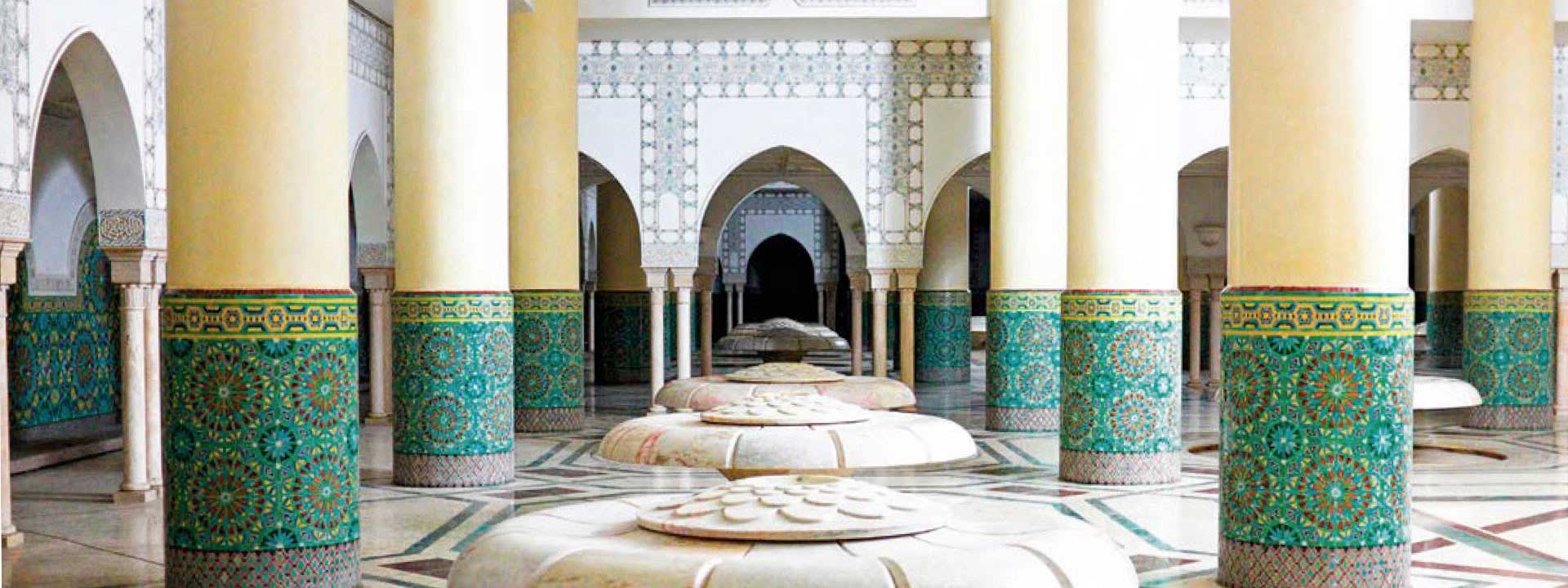
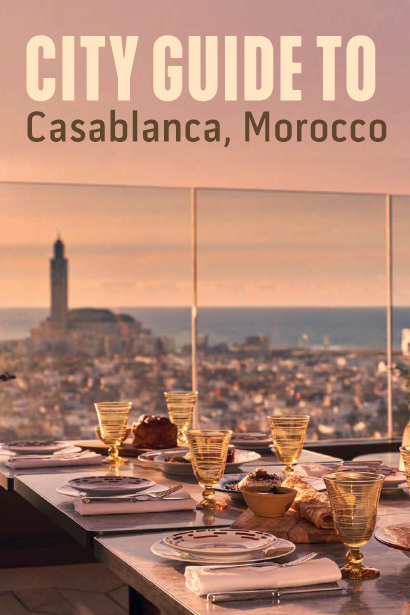
Over its long history, Casablanca has been in a constant state of reinvention. Whitewashed alleys of the compact old medina are contrasted with geometric neoclassical buildings. Ornate neo-Moorish facades, symmetrical art deco structures and sleek modernist towers all coexist in this enchanting city. Here’s our guide to what to do, see and eat in Casablanca.
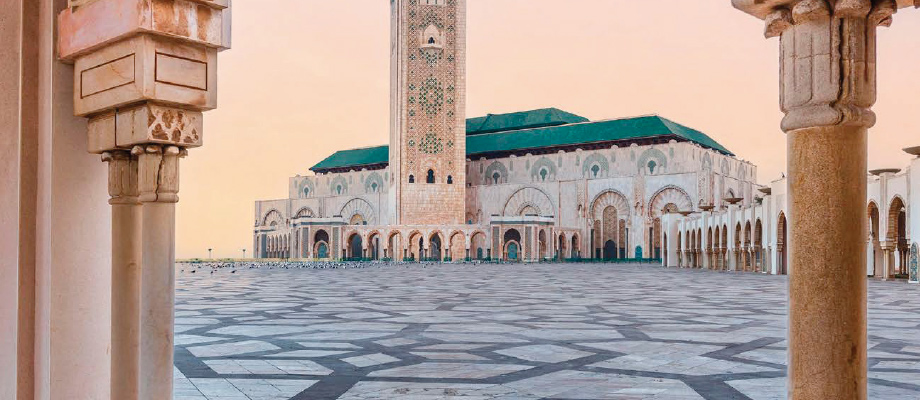
Hassan II Mosque
CULTURE
Casablanca’s most iconic landmark is the Hassan II Mosque, with a 689-foot-high minaret towering above the skyline. It’s a masterclass in Moroccan craftsmanship that took six years, around 6,000 master artisans and thousands more workers to build, from the hand-carved cedarwood ceiling and lace-like stucco to the colossal titanium and brass doors.
Downtown Casablanca has a rich 20th-century architectural heritage, and a good place to start is buzzy Place Mohammed V. The Wilaya (local government building) is topped by a modernist clock tower, while the Palais de Justice embodies neo-Moorish style. To the north, La Poste Centrale is resplendent in art nouveau-style mosaics, while the Bank Al-Maghrib is wrapped in carved stucco.
Some architectural gems have been reborn as museums and galleries, including the neo-Moorish Villa Carl Ficke, built in 1913 for a German entrepreneur, which is now the Casablanca Memory Museum, and the Villa des Arts, set in a stunning 1930s villa, which holds regular art exhibitions, workshops and events. The delightful Abderrahman Slaoui Foundation Museum is tucked into an art deco townhouse, with Orientalist travel posters, ornate Amazigh jewelry and exquisite perfume bottles among the Moroccan decorative arts on display. And the city is also home to the Museum of Moroccan Judaism, the only museum in the Arab world dedicated to Jewish history and culture.
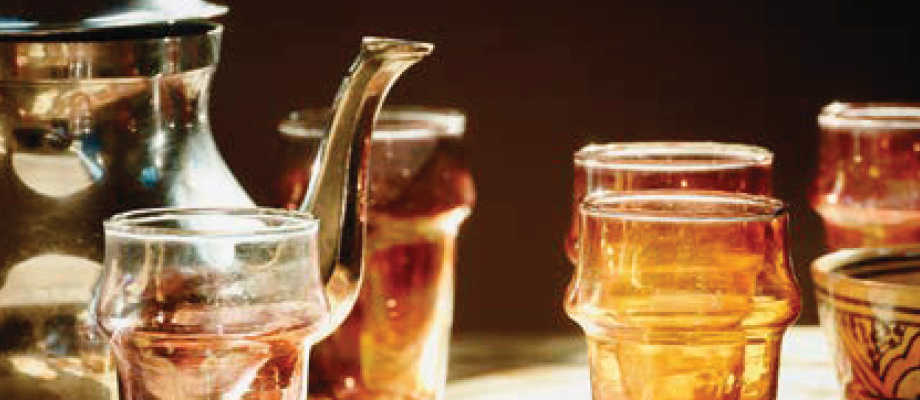
Moroccan tea
Casablanca’s contemporary arts scene is booming, with independent galleries such as L’Atelier 21, La Galerie 38 and Loft Art Gallery showcasing established and emerging local artists. You’ll find art on the streets, too, with organizations such as Sbagha Bagha and Casamouja inviting Moroccan and international artists to paint monumental murals on the city walls.
The city also has a jam-packed festival calendar. In July, Anfa Park south of the center plays host to Jazzablanca, with 10 days of concerts by well-known and up-and-coming artists from Morocco and around the globe. While jazz remains at its heart, everything from funk to fusion features on the line-up. In the same month, the Alif Festival showcases modern Arabic music, while in September, L’Boulevard puts the spotlight on urban music.
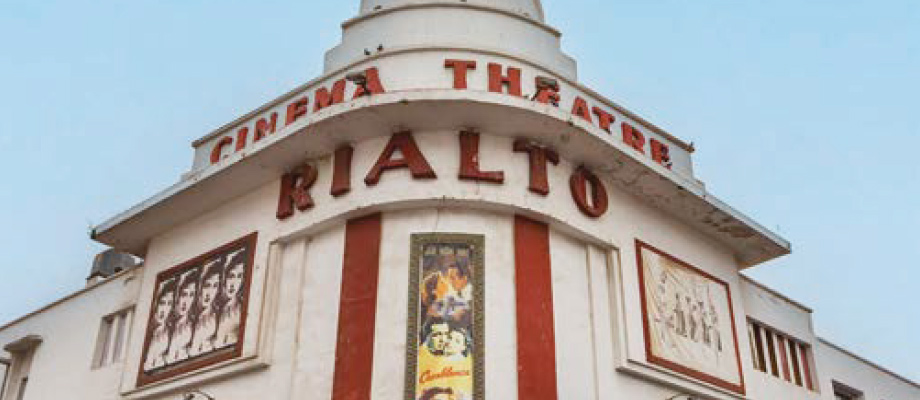
Cinema Rialto
HISTORY
Around the seventh century BCE, a small Amazigh trading port was established in the now-exclusive seaside suburb of Anfa. It was utilized by the Phoenicians and the Romans, and by the early 15th century, it had become a safe haven for pirates. They became such a threat that the Portuguese sent ships to destroy the port in 1468, returning in 1515 to rebuild it, erecting fortifications and naming it Casa Branca ("White House," translated into Arabic as Ad-Dar al-Bayda).
The Portuguese abandoned the colony in 1755 after much of it was destroyed by the devastating Lisbon earthquake, and it wasn’t until around 1770 that the whitewashed medina was reconstructed by the Alaouite sultan Muhammad ben Abdallah — making it the newest major city in the country.
By the mid-1800s, a booming Europe turned to Morocco for supplies of wool and grain, and merchants flocked back to the city. The Spanish renamed it Casablanca, and by the beginning of the 20th century, the French had secured permission to build an artificial harbor.
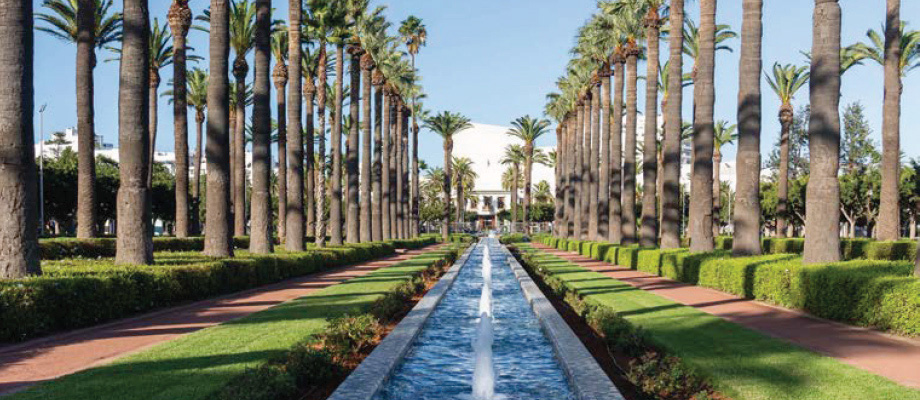
Arab League Park
Increased trade brought prosperity to the region, but influence from and interference by the Europeans — particularly the French — also caused resentment. When violence erupted, the French sent in troops and took Casablanca in 1907. By 1912, Morocco was a French-controlled protectorate with Casablanca as its main port.
The first resident-general, Hubert Lyautey, hired French architect and urban planner Henri Prost to redesign Casablanca as the protectorate’s economic hub and jewel of the French colonies. In turn, Prost enlisted the help of some of Europe’s top architects and his wide boulevards and modern urban planning still survive, as does most of its showstopping architecture.
The Quartier Habous, or new medina, was built between 1917 and 1926 as a solution to a housing crisis; it’s a mix of traditional Moroccan architecture and a European aesthetic, with wide streets and covered arcades. After independence in 1956, Casablanca began its evolution from a French outpost into Morocco’s economic, industrial and financial center, spreading far beyond Lyautey’s grand scheme.
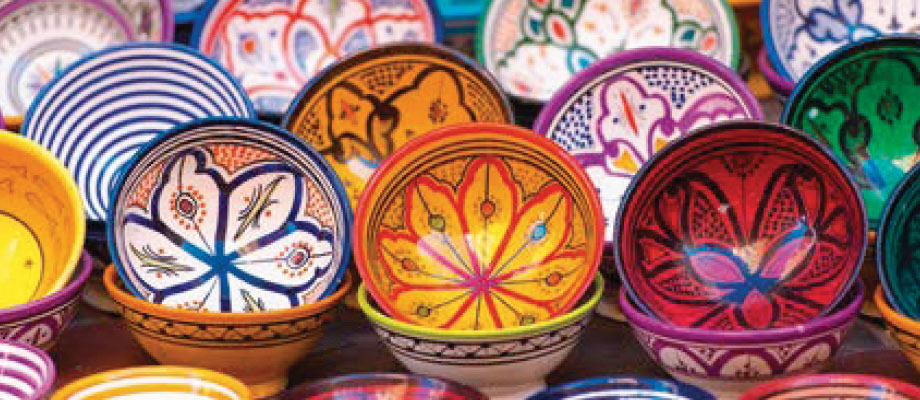
Moroccan market
SHOPPING
While Casablanca doesn’t have Marrakech’s profusion of shopping options, there’s no shortage of things to buy in the souks of Quartier Habous. This is where you’ll find everything from silver jewelry and shaggy rugs to beaten brass, carved wood and handcrafted ceramics. The olive market is the place to stock up on olives of every size and hue, as well as olive oil, spices, saffron, argan oil and honey.
Casablanca’s main shopping area is in Maarif, just south of Boulevard Mohammed Zerktouni. The food market is popular with locals for its fruit and vegetables, spices and olives, as well as fresh flowers and argan products. And there’s all manner of small stores devoted to everything from artisan chocolate to handcrafted ceramics.
Search out more independent boutiques to the west of here in the suburb of Anfa, where stylish concept store Maison H goes local with statement homewares and handcrafted candles, perfumes and beauty products. Or Zyne, which stocks eco-conscious rattan and velvet shoes handmade by women’s cooperatives.
For one-stop shopping, Anfa Place Mall on the Boulevard de la Corniche has a selection of international and Moroccan fashion brands, and stores selling books and beauty products, as well as a supermarket where you can pick up Moroccan wine. Farther south along the coast, the expansive Morocco Mall — the largest in all of Africa — is home to around 350 stores, including luxe brands such as Dior, Givenchy and Louis Vuitton.
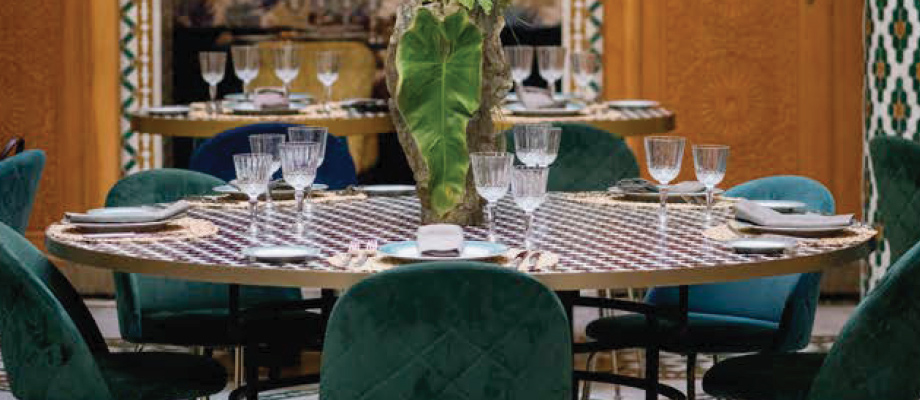
Dar Dada restaurant
FOOD & DRINK
Moroccan cuisine makes good use of spices and sweet-and-savory flavor combinations in quintessential dishes such as tagines, couscous and pastillas. In the old medina, Dar Dada is a beautifully restored riad-turned-restaurant with intricate plasterwork and gleaming zellige tiles, serving tagines with a contemporary twist.
The country’s long coastline guarantees a steady supply of fresh fish. At the Central Market, stalls are piled high with calamari, shrimp and monkfish. Plump oysters from Dakhla can be shucked on the spot, and locals have their purchases grilled or fried at one of the market’s no-frills cafes, served with just-baked bread and a simple salad.
Near El Hank lighthouse, Le Cabestan is a chic spot with spectacular ocean views and a Mediterranean-inspired menu. Opt for a platter of grilled seafood, perhaps, or salt-crusted sea bass, paired with a creative cocktail. Book ahead for a sunset-view seat.
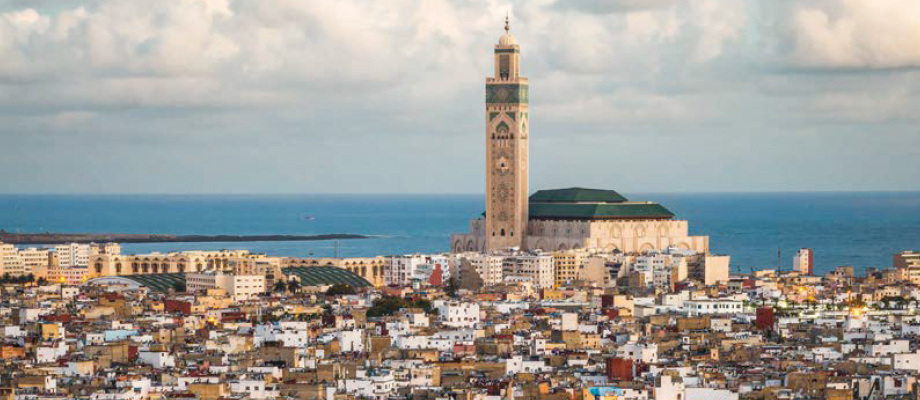
View over the medina
For Moroccan fine dining, step into Le Jasmine in the Hotel Le Doge, with its stained-glass ceiling and red-velvet banquettes. Or La Grande Table Marocaine on the 23rd floor of the Royal Mansour Casablanca, where dishes such as pigeon pastilla, Oualidia lobster and melt-in-the-mouth lamb come with stellar city views.
For fabulous fusion food, head to Table III — awarded Best Restaurant in Morocco 2026 by 50 Best — where chef Fayçal Bettioui artfully blends Moroccan ingredients, French methods and Japanese flavors. To satisfy your sweet tooth, head to Pâtisserie Bennis Habous and look out for almond-flavored ghriba (macaroons) and cornes de gazelle, stuffed with almond paste and laced with orange-blossom water.
And while the national drink may be mint tea, Morocco also has a long history of wine production; it’s known for full-bodied reds and one-of-a-kind gris (a pale rosé). Award-winning Domaine Ouled Thaleb is around an hour’s drive from Casablanca.
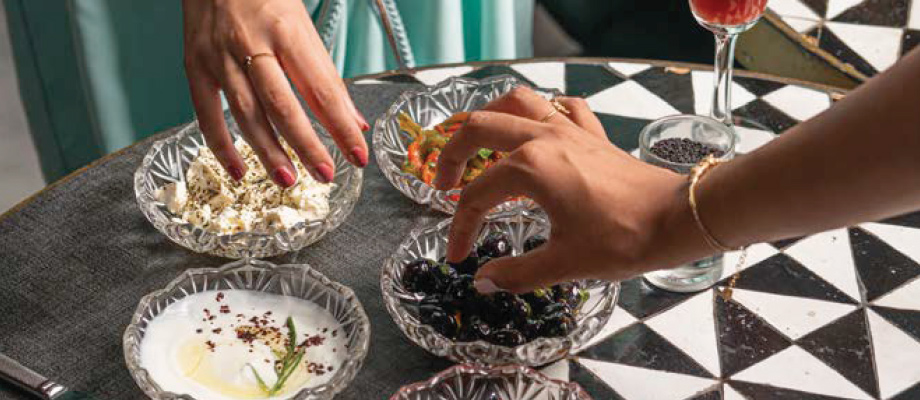
Mediterranean-inspired fare
NIGHTLIFE
The city’s namesake film may have been shot in a Hollywood studio, but the art deco interiors, fez-clad bartenders and tinkling piano at Rick’s Café bring that famed gin joint to life. It’s where you can enjoy cocktails and classic dishes — including Champagne oysters and succulent steaks — as well as live jazz performances.
For spectacular sundowners, head to Le Rooftop at the Royal Mansour Casablanca, where you can dine alfresco on Middle Eastern and Mediterranean-inspired fare — including seafood shawarma or Persian risotto — and drink in the views over a creative cocktail. Or head to the hotel’s seductively lit Le Bar for a nightcap amid the echoes of 1950s glamour.
Lounge bars and clubs along the Corniche attract a younger audience, but after dark, the bar area of Le Cabestan draws a sophisticated crowd to drink, dance and gossip as the DJ spins until the early hours.
Writer: Sarah Gilbert