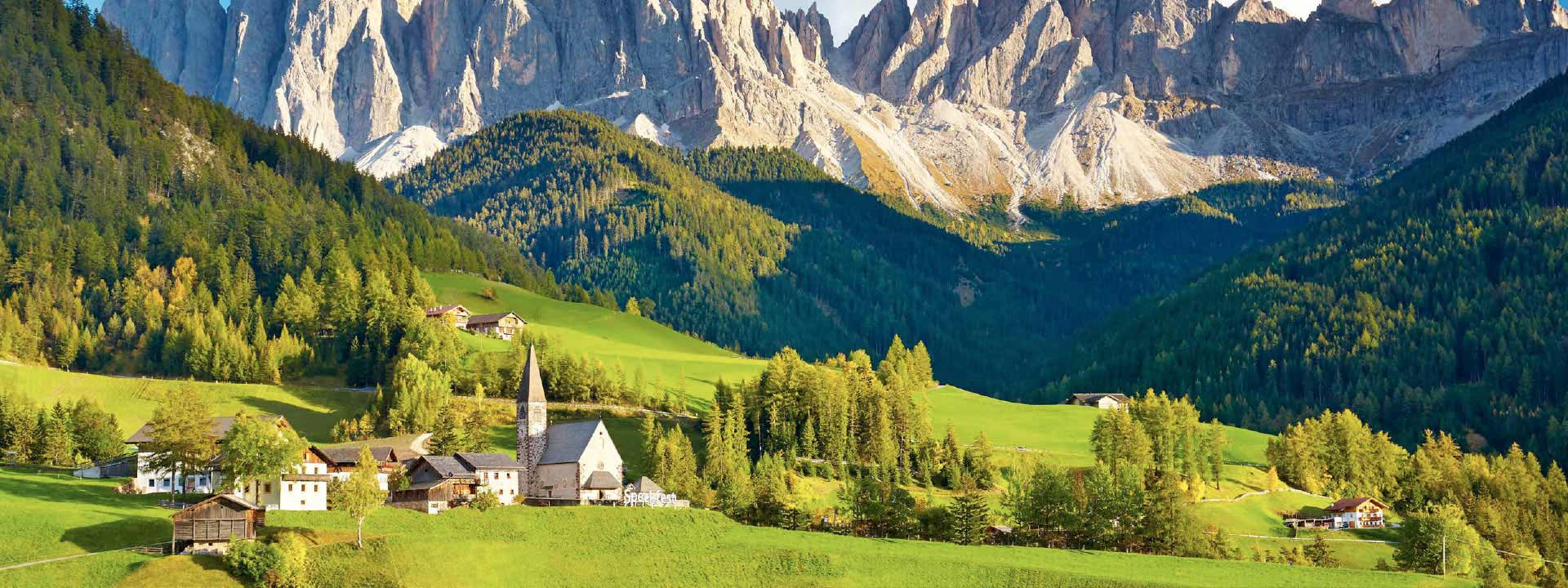
The Dolomites are among the most dramatic peaks on the planet. The mountains in northeastern Italy take their name from Déodat Gratet de Dolomieu, the 18th-century French scientist who first identified the mineral dolomite, which was named in his honor. This area delivers breathtaking Alpine scenery, hearty local cuisine and endless outdoor adventures in equal measures. Find out which locations to visit and how to make the most of your journey.

Lake Sorapis
Characterized by sheer cliffs, jagged peaks and craggy spires more romantic than the ruins of any gothic abbey, these pale rock monoliths began life as coral reefs 250 million years ago, before being thrust skyward by the collision of tectonic plates. Split between the Italian regions of Veneto and Trentino-Alto Adige, their unusual geology gives rise to breathtaking landscapes that have attracted tourists and adventurers since the 1850s. But these days, the Dolomites are just as well known for their distinctive culture — defined by excellent local food and wine, and warm, Italian hospitality.
Each of the nine mountain groups that make up the Dolomites UNESCO World Heritage Site has its own quirks, but there are characteristics that they all share. The valleys are dotted with picturesque villages and verdant vineyards. Higher up, you’ll find stunning mountain lakes, thick forests that turn gold and orange in the fall, and excellent walking trails. Meanwhile the rocky peaks themselves offer opportunities for more serious adventure. There’s fantastic skiing in winter, while the region offers some of the best rock climbing in the world throughout spring and summer.
Due to overtourism, several of the best-known attractions, including Lake Braies, the Three Peaks of Lavaredo and the high Alpine meadow of Alpe di Siusi, have been forced to restrict visitor numbers during the peak summer months. But while all of these are beautiful, they’re not unique — the region is full of crystal Alpine lakes, soaring summits and rolling pastures flanked by phalanx-like peaks. And if you know where to go, it’s perfectly possible to escape into mountains that are almost as empty as when Dolomieu himself passed through some 250 years ago.

Alpine meadow in San Martino di Castrozza
CORTINA D’AMPEZZO
Often dubbed the queen of the Dolomites, Cortina d’Ampezzo combines some of the region’s most iconic mountain views with old-world Alpine glamour. Sitting in a broad valley ringed by peaks — the Tofane, Cristallo and Sorapis massifs rise dramatically on all sides — the town became a favorite with Austrian royals in the 1800s, before exploding in popularity with the growth of skiing in the 20th century.
Ernest Hemingway visited — and wrote a short story about it — in the 1920s. And in the postwar period, when it hosted the 1956 Winter Olympics, it was the fashionable place to go skiing, attracting the likes of Brigitte Bardot, Frank Sinatra and Sophia Loren. These days, summer visitors come for panoramic hikes, made easily accessible by ski lifts that can whisk you up thousands of feet in a matter of minutes. Evenings are for aperitivi on Corso Italia, the storied central street where climbers, hikers and fur-wearing Milanese mingle.
POZZA DI FASSA & VIGO DI FASSA
Technically, Pozza di Fassa and Vigo di Fassa are separate towns, but in reality they feel like one ribbon-like settlement, which stretches out along the Val di Fassa, one of the Dolomites’ most visually striking valleys. This is one of the centers of the Ladin language — an ancient Alpine tongue that’s only spoken in certain areas of the range — and the culture is subtly different from what you find elsewhere in the region.
Pozza di Fassa and Vigo di Fassa are less flashy than Cortina (think wooden farmhouses with flower-filled balconies as opposed to grand old Alpine hotels) but the scenery is equally beautiful, and they have the added advantage of natural hot springs. In summer, this valley, flanked on one side by the Rosengarten Group, is among the best places to appreciate the phenomenon that Italian-speakers call enrosadira, and Germans call alpenglow — when the sunset paints the pale cliffs red and orange.
SAN MARTINO DI CASTROZZA
On the southern edge of the Dolomites, San Martino di Castrozza sits beneath one of the region’s most spectacular skylines — the Pale di San Martino mountains. The village is blessedly quiet compared to some of the Dolomites’ more celebrated destinations and retains a nostalgic belle époque feel. Walking trails begin almost in town, while cable cars offer easy access to high meadows and panoramic viewpoints, making this one of the best bases for moderate hikes as well as more demanding climbs.

Lake Dobbiaco in South Tyrol
DOBBIACO
Dobbiaco — or Toblach, as it’s known among the German-speaking locals — sits in the upper Pusteria valley, and serves as a great gateway town to the Tre Cime di Lavaredo, perhaps the Dolomites’ most iconic peaks. Wide cycling and walking paths connect the town with nearby lakes and valleys, including postcard-perfect Lake Braies. Both the iconic three peaks and the lake are best avoided during peak season, when the crowds are at their worst. But despite being close to these Instagrammable attractions, Dobbiaco manages to remain relatively low key, with an atmosphere that feels relaxed and outdoors-focused.
TIRES
While nearby Alpe di Siusi is one of the most photographed places in the Dolomites, the small village of Tires, tucked around the other side of the Catinaccio massif, offers a quieter alternative. Here, visitors can expect pastures, forest walks and family-run inns.
The surrounding Sciliar-Catinaccio Natural Park offers accessible walking routes with immense views. The village isn’t big, but if you can get a hotel room, it’s an excellent choice for a quieter getaway while still enjoying classic Dolomite scenery.
MADONNA DI CAMPIGLIO
Madonna di Campiglio is probably the best place to base yourself if you want to explore the Brenta Dolomites — the westernmost of the nine UNESCO-recognized mountain groups. While the infrastructure for walking, climbing and mountain biking is excellent here, the Brenta Dolomites tend to attract fewer crowds in summer than some of their eastern cousins, and their peaks and passes often feel wilder and more rugged.
The town and its surrounding satellite settlements balance Old-World charm with modern comforts. In winter, the ski area is a favorite with Milanese second-home owners, and Madonna is home to more than one Michelin-starred restaurant. But not everything is super high-end here, and despite its reputation as a fashionable resort, Madonna remains remarkably accessible — offering spectacular scenery without requiring strenuous effort.


Rifugio Tuckett
HISTORY & HERITAGE
While they’re now synonymous with Italy, the Dolomites have not always been Italian. For more than 500 years, this area was part of the Austro-Hungarian Empire, and Austria’s influence is still visible in the region’s onion-domed churches, hearty cuisine, accordion-powered folk music and lederhosen-like traditional dress — particularly in the autonomous province of Alto Adige (or Südtirol, as the locals call it) where German is still widely spoken.
If the region’s history is reflected in its language, it’s also written into the rock. Walk the streets of Trento, capital of the Trentino autonomous province, to see the fossilized forms of the sea creatures whose shells created the mountains, preserved in the pink Dolomite stone of the pavements.
The Dolomites might be incredibly peaceful today, but this wasn’t always the case. During World War I, the conflict which finally ended Austrian rule of the region, pitched battles were fought among these mountains, with soldiers from both sides tunneling into the cliffs and glaciers, laying explosives and setting off avalanches to gain an advantage over the enemy. Today, many of the old fortifications have been turned into museums commemorating the horrors of the White War. But it’s not uncommon to see old bullet casings, rusty mess tins or strings of barbed wire on secluded trails to this day.

Charcuterie board
FOOD & DRINK
Dolomite cuisine reflects the region’s cultural crossroads and multi-ethnic history blending Italian, Austrian and Ladin influences into something distinctly Alpine. It majors in hearty mountain fare — cured meats and local cheeses, sausages, venison stews, canederli (dumplings), sauerkraut and the omnipresent polenta are all as typical as Italian classics like pasta or pizza. Mountain huts or rifugi, play a key role in the food experience. And if the food occasionally feels Austrian, the attitude toward food is pure Italian. Many walking trials lead to rifugi serving excellent three-, four- or even five-course meals, and lunches become leisurely affairs.
Wine-lovers will find excellent whites from Alto Adige, home of grapes like gewürztraminer, and reds made of teroldego from Trentino. Trentodoc, the region’s answer to Prosecco, is increasingly gaining an international reputation, too — Ferrari trentodoc is often sprayed instead of Champagne at Formula One races.

Vigo-Catinaccio cable car at Ciampedie, Val di Fassa
ADVENTURE
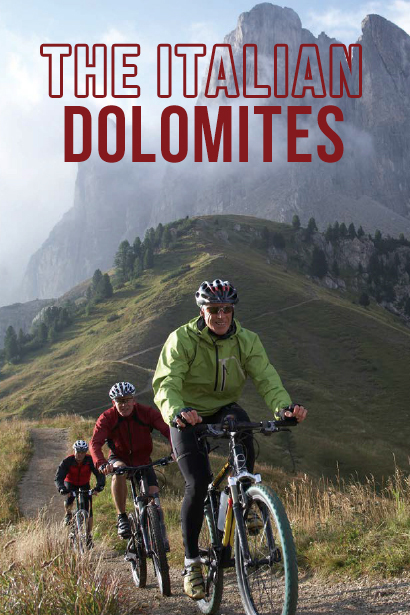
While the sheer cliffs seem built for extreme sports, adventure in the Dolomites doesn’t have to involve risk. For many visitors, the joy lies in accessible mountain experiences where the scenery rather than the climb takes your breath away. The infrastructure is excellent, with well-signposted walking trails suited for all abilities, and cable cars allowing hikers to start high rather than beginning every hike from the valley floor.
Cycling paths connect many towns, while e-bikes now make steeper mountain biking more manageable. The Dolomites are also the birthplace of the via ferrata — climbing routes with ladders and fixed cables for safety, offering high altitude climbing without requiring much technical skill. In winter, skiing remains the region’s main draw, with interconnected pistes suitable for intermediate skiers and outstanding mountain panoramas.
Writer: Tristan Kennedy