'



A 3 Week Excursion to the Land of Pharaohs
View My Main Profile
Ahmer Khan
Sacramento, CA Travel Agent
Ahmer Khan
Sacramento, CA Travel Agent· 9 Years of Experience
Hourglass Expeditions, an independent agent with Cruises & Tours, Unlimited, a Travel Leaders Network Affiliate Agency
5.0
(32)
100% Recommended
I had a great experience working with Ahmer Khan as our travel agent. He was very helpful in organizing our family tourist visit to Ireland. He... Read More >
DESTINATIONS VISITED:Egypt, Western Sahara
PLACES VISITED:Abu Simbel, Alexandria, Aswan, Cairo, Dahab, Giza, Hurghada, Luxor, Sharm El Sheikh
SUGGESTED DURATION:21 Days
While a 7 to 10 day trip to Egypt is long enough to give you a good overview of the sites and locations along the Nile River, where 95% of the Egyptian population resides, consider a 3-week expedition to Egypt. This way, not only will you be able to get a deep dive of the entire Nile Valley, but you will also be able to experience the Red Sea area in the Sinai Peninsula on the eastern end of the country, but also Siwa Oasis near the Libyan border to the far west. You can also on an overnight camping trip to the White Desert to explore the mushroom shaped rock formations that appear almost extraterrestrial.
Here are the stops for the 3-week excursion into the land of the pharaohs.
1. Cairo
2. Alexandria
3. Luxor
4. Aswan
5. Abu Simbel
6. Hurghada
7. Sharm El-Sheikh
8. Dahab
9. The Western Desert
10. Return to Cairo
But if you don't have 3 weeks, we can always curate a trip that meets the needs of your group and timeline.
Close All Days
DAY1
Giza
Close Day
The Giza Pyramid Complex
This is the reason most travelers come to Egypt. The Giza Pyramid Complex holds the only Wonder of the Ancient World that is still left standing. The three pyramids, the Khufu (The Great Pyramid or the Pyramid of Cheops), the Pyramid of Khafre, and the Pyramid of Menkaure. They were all constructed during the Fourth Dynasty of the Old Kingdom, between 2,600 and 2,500 BC. And standing in front of them is the enigmatic statue of the Great Sphinx, facing the metropolis of Cairo and the Nile River. While exploring this UNESCO World Heritage site, make sure to take the time to enter one of the pyramids and make your way into the King's Chamber, and let your imagination take you back over 4,500 years of human history to when these monoliths were being built.
HIGHLIGHTS:
The Great Pyramid
The King's Chamber inside the Great Pyramid
The Great Sphinx
Best Location for a Picture from the Panoramic Point behind the Pyramids
The Valley Temple
The Sound and Light Show (after Sunset)
DAY2
Cairo
Close Day
Coptic Cairo
Coptic Cairo, also known as Old Cairo, is a historic area located in the southeastern part of the city. It is home to some of the oldest Christian churches in the world and is considered a major center of Coptic culture and heritage. The earliest settlements here can be traced back to the 6th century BC. The streets in this area are small and winding. Tourists interested in history, religion, and architecture will enjoy visiting this area as it has so much to offer in small, walkable area.
Coptic Cairo contains several important religious sites, including the Coptic Museum, the Hanging Church (also known as the Church of the Virgin Mary), the Church of St. George, the Church of St. Sergius and Bacchus, and the Ben Ezra Synagogue. The area also includes several ancient Roman and Islamic structures, such as the Roman Fortress of Babylon, the Mosque of Amr Ibn al-As, and the Mosque of Ibn Tulun.
HIGHLIGHTS:
Hanging Church (Saint Virgin Mary’s Coptic Orthodox Church)
Coptic Museum
Greek Orthodox Church of St. George
Church of St. Sergius and Bacchus
Ben Ezra Synagogue
Roman Fortress of Babylon
Mosque of Amr Ibn al-As
Mosque of Ibn Tulun
DAY3
Cairo
Close Day
Exploring the Ancient City of Memphis
A visit to the Saqqara necropolis is a unique opportunity to explore one of the world's oldest and most extensive burial grounds. Located about 30 km south of Cairo, Saqqara was the burial site for the ancient capital of Memphis and features some of Egypt's oldest and most fascinating pyramids and tombs.
One of the most famous structures here is the Step Pyramid of Djoser, built in the 27th century BC by the famous architect Imhotep. This pyramid is considered the oldest stone structure in the world and represents a significant milestone in the development of ancient Egyptian architecture.
You can also explore the Pyramid of Unas, which features one of the best-preserved pyramid texts, and the Pyramid of Teti, which has an impressive interior covered hieroglyphics.
The Saqqara necropolis is also home to several tombs of ancient Egyptian officials and nobles, including the Tomb of Ti and the Tomb of Mereruka, which features over 30 rooms and exquisite reliefs.
HIGHLIGHTS:
Saqqara Necropolis
Step Pyramid of Djoser
Pyramid of Unas
Pyramid of Unas
Pyramid of Teti
Tomb of Ti
Tomb of Mereruka
DAY4
Alexandria
Close Day
The Port City of Alexandria
Alexandria, located in the north of Egypt, is a beautiful coastal city with a rich history and culture. It was was founded by Alexander the Great in 331 BC. It was established as a new capital of Egypt, and quickly became one of the most important cultural, intellectual, and commercial centers of the ancient world. Over the centuries, it also held the Library of Alexandria, one of the most important centers for learning in the ancient world. The city was also known for its great lighthouse, the Pharos of Alexandria, which was one of the Seven Wonders of the Ancient World.
Some of the top places to visit include the Bibliotheca Alexandrina, the Citadel of Qaitbay, the Roman Amphitheater, and the Catacombs of Kom el Shoqafa. The city also has beautiful beaches, parks, and gardens, such as the Montazah Palace Gardens and the Alexandria National Museum.
HIGHLIGHTS:
Library of Alexandria
Catacombs of Kom El Shoqafa
National Museum of Alexandria
Citadel of Qaitbay
Roman Amphitheater
Montazah Palace Gardens
DAY5
Cairo
Close Day
Islamic Cairo
Islamic Cairo is a historic district of the city that dates back to the Islamic period of the city's history, which began in the 7th century AD. It is home to many of Cairo's most important Islamic monuments, including mosques, madrasas, and mausoleums, and it is considered one of the most important Islamic sites in the world.
Some of the most famous landmarks in Islamic Cairo include the Mosque of Ibn Tulun, which is one of the oldest and largest mosques in Cairo, and the Al-Azhar Mosque, which is one of the most important centers of Islamic scholarship in the world. Other notable sites include the Sultan Hassan Mosque, the Al-Hakim Mosque, and the Al-Ghuri Complex.
HIGHLIGHTS:
Mosque of Ibn Tulun
Al-Azhar Mosque
Sultan Hassan Mosque
Al-Hakim Mosque
Al-Ghuri Complex
DAY6
Luxor
Close Day
Temple of Karnak and Luxor
Today, you will leave Cairo and take a 1 hour flight to Luxor. Upon arrival, check into your hotel and then prepare to be amazed by two of the most amazing temples you may ever see (perhaps outside of Cambodia).
First, visit the Temple of Karnak. Depending on your interest in antiquity, this might be the only one you do today. This massive temple complex was the principal religious center of the god Amun-Re in Thebes during the New Kingdom (which lasted from 1550 until 1070 B.C.E.). It is one of the largest religious complexes ever built. The Great Hypostyle Hall, just by itself, covers an area of 50,000 square feet and contains 134 columns, each with a height of 20 meters (66 feet). It was built by Seti I from the 19th Dynasty (1291-1279 BC).
Just down the road from Karnak is Luxor Temple. It was commissioned during the reign of Amenhotep III around 1,400 BC and is still very well preserved.
Both of these temples are UNESCO World Heritage Sites.
HIGHLIGHTS:
Temple of Karnak
Temple of Luxor
DAY7
Luxor
Close Day
The Valley of Kings and Queens
Today, we will visit sites on the western side of the Nile River.
We will start by exploring the Valley of the Kings, a UNESCO World Heritage Site and burial site of pharaohs and powerful nobles during the New Kingdom period (1570 to 1069 BC). There, we will explore some of the most impressive tombs, such as the tomb of Tutankhamun and the tomb of Ramses III. Afterward, we will visit the nearby Valley of the Queens, where the wives of pharaohs and their children were buried.
Then, we will visit the Temple of Hatshepsut, a stunning mortuary temple dedicated to the only female pharaoh of Egypt.
Finally, we will visit Colossi of Memnon, which are two massive stone statues of the Pharaoh Amenhotep III.
HIGHLIGHTS:
Valley of the Kings
Valley of the Queens
Temple of Hatshepsut
Colossi of Memnon
DAY8
Luxor
Close Day
The Temples of Ramesses II and III
We will begin the day with an early morning Hot Air Balloon Ride over the valley and Nile River. Then, after breakfast, we will continue with exploring the Medinet Habu temple and the Ramesseum.
The Medinet Habu temple was built in the 12th century BC by the pharaoh Ramesses III. The temple is renowned for its stunning architecture and intricate carvings, which depict scenes from ancient Egyptian mythology and history. A visit here involves a tour of the various structures within the complex, including the massive main temple, the smaller temple of Amun, and the vast courtyard, which is surrounded by towering walls adorned with intricate reliefs and carvings.
The Ramesseum is another stunning ancient structure that is is nearby. Built in the 13th century BC by the pharaoh Ramesses II, the temple was dedicated to the god Amun and is renowned for its massive statues, which depict the pharaoh in various poses and are some of the largest ancient sculptures in the world.
HIGHLIGHTS:
Medinet Habu
Ramesseum
DAY9
Aswan
Close Day
Exploring the Aswan Region
Today, we will begin by visiting the Philae Temple. It is located on the island of Philae in the Nile River. It was built in the 4th century BC and is dedicated to the goddess Isis. The temple features stunning architecture and a fascinating history that includes both pagan and Christian influences. A visit to Philae involves a boat ride to the island, followed by a guided tour of the various structures within the temple complex, including the main temple, the kiosk of Trajan, and the temple of Hathor.
After exploring the Philae Temple, we take a short drive to the nearby High Dam, which was built in the 1960s to control the flow of the Nile River and provide hydroelectric power to the region. The dam is a marvel of modern engineering, standing over 110 meters tall and stretching over 3.8 kilometers in length. A visit to the High Dam typically will include a guided tour of the power plant and the observation deck, which offers stunning views of the surrounding landscape.
HIGHLIGHTS:
Philae Temple
Aswan High Dam
DAY10
Aswan
Close Day
The Nubian Museum and Unfinished Obelisk
Visiting the Unfinished Obelisk and the Nubian Museum is a unique opportunity to learn about the ancient history and culture of Nubia, an ancient region that once stretched along the Nile river in what is now southern Egypt and northern Sudan.
The Unfinished Obelisk is a massive granite structure that was never completed, and now lies abandoned in a quarry in Aswan. Visitors can explore the site and learn about the ancient techniques used to carve and transport these massive structures.
The Nubian Museum is a well-curated museum that showcases the rich history and culture of the Nubian people. The museum features a large collection of artifacts, including pottery, jewelry, and statues that provide insights into the daily life, traditions, and beliefs of the Nubian people.
During your visit, you can explore the different galleries and exhibits, and learn about the Nubian language, music, and art.
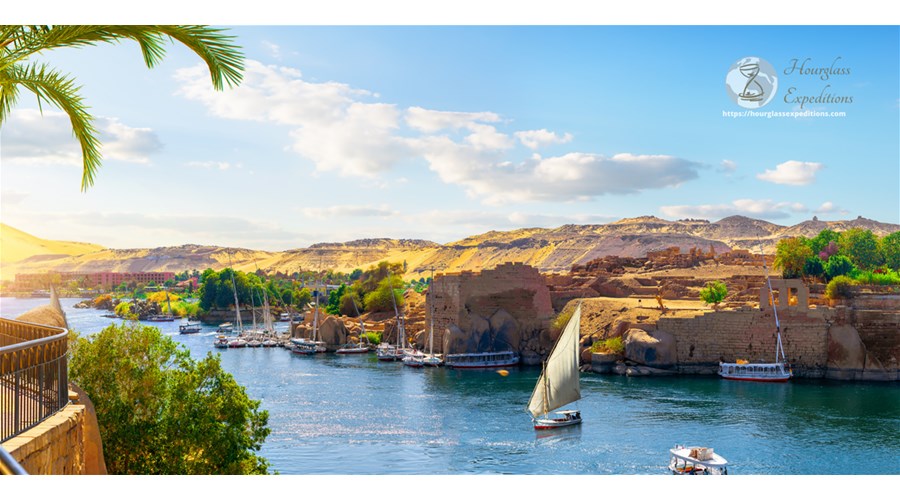
Afterwards, that a sunset Felucca boat ride on the Nile River
HIGHLIGHTS:
Nile River Felucca Ride
Unfinished Obelisk
Nubian Museum
DAY11
Abu Simbel
Close Day
Day Trip to Abu Simbel
Today, we will travel from Aswan to the the southern border, near Sudan to visit Abu Simbel. The temples were dedicated to the gods Amun and Ra-Horakhty, and are renowned for their massive scale and stunning architecture.
A visit to Abu Simbel typically involves a tour of the two temples, which are carved directly into the side of a rock cliff overlooking the Nile River. The larger of the two temples is the Temple of Ramesses II, which features four massive statues of the pharaoh himself, each measuring over 20 meters in height.
The smaller of the two temples is the Temple of Hathor, which was dedicated to the goddess of love and music. The temple features six statues of Hathor, each with the head of a cow.
One of the most fascinating aspects of Abu Simbel is the incredible engineering feat that was required to relocate the temples in the 1960s, in order to save them from being flooded during the construction of the Aswan High Dam.
HIGHLIGHTS:
Abu Simbel
DAY12
Aswan
Close Day
Relax in Aswan
Take it slow today and spend the day like a local. Head over to the Nile and wander along the Corniche, which is a picturesque riverside promenade that stretches along the eastern bank of the Nile River. It is a popular destination for tourists and locals alike.
The Corniche is lined with palm trees and beautiful gardens, allowing you to take a leisurely stroll along the pathway, enjoying the views and the cool breeze.
One of the most prominent landmarks along the Nile Corniche is the Aswan Botanical Garden, a beautiful island garden that is home to a diverse range of plant species from around the world. You can take a felucca ride from the Corniche to the garden and enjoy a peaceful and serene area.
In the evening, you can take a walk through the Aswan Old Market, where you can find a variety of souvenirs, spices, and traditional crafts. You can also stop by one of the local cafes or restaurants to try some traditional Nubian food, such as kofta, fuul, or shakshuka.
HIGHLIGHTS:
Nile Corniche
Aswan Night Market
Aswan Botanical Garden
DAY13
Hurghada
Close Day
Travel to Hurghada on the Red Sea
We will start your day with a visit to the Hurghada Aquarium and Marine Biology Museum, where we can explore a variety of marine life exhibits, including an underwater tunnel where we can walk through a shark tank.
Next, we will spend the afternoon at one of Hurghada's beautiful beaches, such as the popular Sunny Beach or the quieter Makadi Bay. Relax on the sand, go for a swim in the crystal-clear waters, and enjoy some sunbathing.
Finally, we will wrap up the day with a visit to the Hurghada Grand Mosque, one of the largest and most impressive mosques in Egypt. We can admire the stunning architecture and learn about Islamic culture and traditions.
HIGHLIGHTS:
Hurghada Aquarium
Marine Biology Museum
Hurghada Grand Mosque
DAY14
Hurghada
Close Day
Desert and Water Activities around Hurghada
Start your day with an exciting adventure by booking a snorkeling or diving excursion to explore the vibrant coral reefs and underwater ecosystems of the Red Sea. One of the better locations are the waters around Giftun Island.
After your underwater adventure, head to the Hurghada Marina once again to explore the shops and boutiques, and grab a bite to eat at one of the many restaurants or cafes.
Take a desert safari tour to explore the stunning landscapes of the Hurghada region. Ride on a quad bike, explore the sand dunes, and visit a Bedouin camp to learn about their culture and way of life.
End your day with a relaxing dinner cruise on the Red Sea. Enjoy a delicious meal while taking in the stunning views of the coastline and the shimmering waters of the Red Sea.
HIGHLIGHTS:
Snorkeling
Bedouin Camp
Giftun Island
DAY15
Sharm El Sheikh
Close Day
Resort of Sharm El-Sheikh
You will take a private car to Sharm El Sheikh.
After taking a short rest, visit Naama Bay. This popular beach area offers plenty of water sports activities, including parasailing, jet skiing, and banana boat rides. You can also explore the beach promenade, lined with shops, cafes, and restaurants.
In the evening, head to Old Sharm. This traditional area of the city is home to some of the best restaurants and cafes in Sharm El-Sheikh. You can enjoy some delicious seafood or traditional Egyptian food while taking in the lively atmosphere of the area.
HIGHLIGHTS:
Naama Bay
Old Sharm
DAY16
Sharm El Sheikh
Close Day
Diving the Red Sea
The waters around Sharm El Sheikh have some of the world's best diving destinations. There are two primary ones that we will select from.
The first is Ras Mohammed National Park, a marine reserve that boasts more than 1,000 species of fish and an abundance of colorful coral reefs. Here, you can explore dive sites like Shark Reef and Yolanda Reef, which are known for their diverse marine life, including sharks, rays, and turtles.
Another popular diving destination is Tiran Island, located at the entrance to the Gulf of Aqaba. This area features a number of dive sites with stunning coral gardens, as well as the wreck of the SS Thistlegorm, a World War II-era ship that sank in 1941 and is now home to a wide variety of marine life.
HIGHLIGHTS:
Ras Mohammed National Park
Tiran Island
DAY17
Dahab
Close Day
Resort Town of Dahab
You will start the day with a visit to the famous Blue Hole. This natural sinkhole is popular among divers and snorkelers, and offers stunning views of the surrounding Red Sea where you can spot various colorful fish and other marine life.
After the Blue Hole adventure, you will go to the nearby Ras Abu Galum nature reserve for a hiking or camel trekking tour. The reserve offers breathtaking views of the Sinai Mountains and the Red Sea, and is a great way to experience the natural beauty of the region.
Returning to Dahab, enjoy some shopping at the local markets and bazaars. Dahab is known for its colorful and vibrant markets, where you can find everything from handmade crafts to spices, clothing, and jewelry.
You will end the day with a visit to the famous Lighthouse area, where you can enjoy a delicious dinner at one of the many seaside restaurants or take a walk along the promenade, which offers stunning views of the Red Sea and the mountains in the distance.
HIGHLIGHTS:
Blue Hole
Ras Abu Galum Nature Reserve
DAY18
Dahab
Close Day
Searching for the Ten Commandments
A visit to St. Catherine's Monastery begins with a tour of the monastery's ancient walls. You will explore the chapel of the Burning Bush, where it is said that God spoke to Moses, and the library, which houses some of the oldest religious texts in the world.
From St. Catherine's Monastery, you will climb Mount Sinai, the site where Moses is said to have received the Ten Commandments. The climb to the summit is a challenging but rewarding journey, taking you up a steep and winding path through rugged terrain and stunning desert landscapes.
Along the way, there are a number of important sites, including the Chapel of the Holy Trinity and the site of the Golden Calf. As you climb higher, you'll be treated to stunning views of the surrounding landscape, including the rugged peaks of the Sinai Mountains and the vast expanse of the desert below.
At the summit, you'll be rewarded with an incredible view of the sunrise, which casts a warm glow over the surrounding landscape.
HIGHLIGHTS:
Mount Sinai
Saint Catherine's Monastery
DAY19
Western Sahara
Close Day
The Great Western Desert
A visit to the White Desert typically involves a tour of the various formations, which range from towering spires and pillars to surreal mushroom-shaped rocks and otherworldly landscapes. You will also camp overnight in the desert, sleeping under the stars in the shadow of these stunning rock formations.
The Black Desert, located just south of the White Desert, is similarly unique, but features a landscape that is markedly different. Here, the rock formations are made of black basalt and granite, creating a stark and striking contrast to the white landscape of the nearby White Desert.
Visitors to the Black Desert can explore the area on foot or by camel, taking in the stark beauty of the rock formations and the surrounding desert landscape. You will also visit the nearby oasis town of Bahariya, where you can relax in the hot springs, explore ancient tombs, and learn about the history and culture of the area.
HIGHLIGHTS:
White Desert
Black Desert
Bahariya
DAY20
Western Sahara
Close Day
In the Footsteps of Alexander the Great
Today, we will visit two amazing areas in the Western Desert: Crystal Mountain and Siwa Oasis.
Located in the Western Desert of Egypt, Crystal Mountain is a stunning natural wonder that boasts crystal formations embedded in the rocks. The mountain gets its name from the sparkling crystals that reflect the sun's rays, creating a dazzling and otherworldly effect. You can hike up the mountain to explore the crystal formations and take in the panoramic views of the surrounding desert.
The Siwa Oasis is a remote and isolated oasis town in the heart of the Western Desert. It's home to a small community of Berber people who have lived in the area for centuries. The oasis is famous for its hot springs, salt lakes, and date palms, as well as its rich history and culture. You can explore the town's ancient ruins, including the Temple of the Oracle, which dates back to the 6th century BC. Alexander the Great consulted with the Oracle before launching his campaign into Asia.
HIGHLIGHTS:
Crystal Mountain
Siwa Oasis
DAY21
Cairo
Close Day
Mae Alsalama (Good Bye) Egypt
On your last day in Cairo, catch up on the activities or attractions that you didn't get the time for. Here are a few options:
A visit to the Khan El-Khalili bazaar today will be the best opportunity to get your souvenir
Watch the Sound and Light Show at the Pyramids of Giza. You'll see the pyramids lit up against the night sky, while the sound and light effects add to the dramatic atmosphere.
Take a sunset felucca boat ride on the Nile River.
Visit the City of the Dead, a necropolis that dates back to the 7th century where the living reside next to the graves of the dead.
Go shopping in the glitzy Zamalek district on Gezira Island.
HIGHLIGHTS:
Khan El-Khalili
Sound and Light Show at the Pyramids of Giza
Sunset Felucca boat ride on the Nile River
City of the Dead
Zamalek District on Gezira Island
FINAL THOUGHTS
A trip to Egypt is a truly unforgettable experience that offers a glimpse into the history, culture, and natural beauty of one of the world's most fascinating civilizations. Egypt will likely stay at the top of your "Best of" list.